
Gambit Stream Sportsbook Platform
Full sportsbook rebuild on AWS/Kubernetes/Pulsar/Flink: 25,000+ concurrent users at sub-30ms latency, 68% first-session betting conversion and 58% back-office workload cut.
- 25K+Concurrent users during Champions League peaks
- 68%First-session betting conversion
- 58%Back-office workload reduction
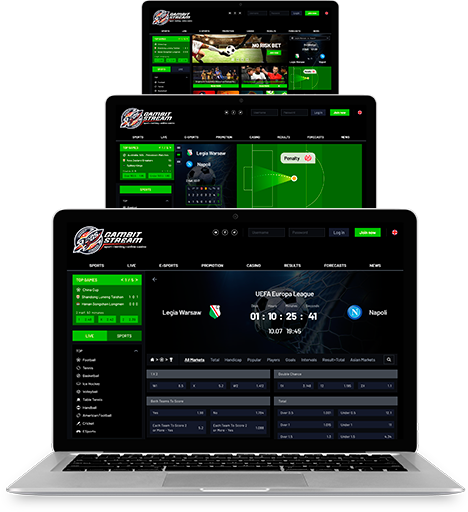
Gambit Stream runs a licensed sportsbook for a global audience across 30+ sports. The platform had to replace a monolithic legacy system that was failing under load – page times above 4 seconds, manual odds polling and back-office settlement consuming over half of operational staff time. Rebuilding it meant keeping the book live throughout the migration while laying a foundation that could absorb 25,000+ concurrent users and 12,000+ bets per minute without flinching.
The Challenge
The legacy sportsbook could not handle real-time odds updates or scale during major events. Odds refreshes required manual polling. Settlement was a human-intensive bottleneck. The back-office process consumed more than 50% of operational staff hours – an unsustainable ratio for a platform targeting peak Champions League and World Cup traffic. The stakes were high: a live migration with zero downtime tolerance and an operator already serving active bettors.
Three non-negotiable goals drove the build: a dependable real-time betting engine, live streaming wired directly to betting markets and a seamless experience for both end-users and operators.
Engineering Approach
We started with a full performance audit of the legacy system, then designed a phased migration strategy that kept the sportsbook operational throughout the rebuild. The core architecture moved from monolithic to event-driven microservices – each service owning its domain, communicating through Apache Pulsar message streams and scaled independently on Kubernetes with Istio managing traffic and resilience.
Real-time odds delivery runs over WebSocket with Apache Flink processing live streams of betting events and user activity. Apache Pulsar handles event streaming so bets and odds flow without queuing delays. Apache Cassandra was chosen for data storage – purpose-built for the high-write, high-availability demands of a live betting platform. The entire stack runs on AWS.
Tech Stack
Backend: Java with Spring Boot for sportsbook logic. Apache Pulsar for event streaming. Apache Flink for real-time data pipelines and betting event analysis.
Frontend: NextJS optimized for fast load times and smooth interactions under heavy live-betting traffic.
Infrastructure: Apache Cassandra for high-volume real-time data. Kubernetes with Istio for traffic management, autoscaling and resilience. ClickHouse for analytics. Deployed on AWS.
Integrations: Live video streaming providers synchronized with betting markets. Secure payment gateways. Operator analytics and monitoring tools for real-time performance visibility.
Key Features Delivered
Real-time betting engine – handles thousands of bets per second with sub-30ms odds delivery. 500+ odds adjustments per second across all active markets, automated by risk management algorithms.
Live streaming integration – bettors watch matches and place bets on the same screen. Video synchronized with betting markets for a single, uninterrupted experience.
Wallet and account system – fast deposits, withdrawals and wallet management. Onboarding flow gets bettors from registration to first wager in under 2 minutes.
Risk management tools – automated controls identify suspicious patterns, manage exposure and ensure fair betting. Manual intervention reduced sharply.
Admin panel and analytics dashboard – centralized dashboards and real-time reporting give operators complete visibility. New sports and markets deploy within 24 hours without platform restarts.
Business Results
68% first-session betting conversion. Streamlined onboarding with quick-bet options reduced time-to-first-wager to under 2 minutes. Removing friction directly translated to revenue on day one.
25,000+ concurrent users at sub-30ms latency. The platform handles full peak load during major sporting events – Champions League, World Cup – without degradation. 12,000+ bets per minute processed in real time.
58% reduction in back-office workload. Automated settlement, centralized dashboards and real-time reporting eliminated the manual bottleneck that had consumed over half of operational staff time.
99.95% uptime including during peak event periods. Stream startup time cut from 4.2s to 0.9s. Concurrent viewers per node increased from 1,200 to 8,500. Bandwidth cost per viewer-hour dropped from $0.14 to $0.038.
Why It Worked
The migration succeeded because the architecture was designed for continuous operation – not a big-bang cutover. Phased delivery meant the operator stayed live throughout. Event-driven microservices on Kubernetes meant each component could scale independently at peak. And the risk engine automation meant back-office teams could focus on decisions, not manual processing.
A modern sportsbook is a real-time data problem first and a betting product second. Getting the streaming architecture right – Pulsar for events, Flink for pipelines, Cassandra for writes, WebSocket for delivery – is what made the user-facing performance numbers possible.
Want a project like this?
Scoped roadmap and commercials within 48 hours of intake. No deposit to receive the quote.